
TMJ Disorder Assessment & Management in Rochedale South
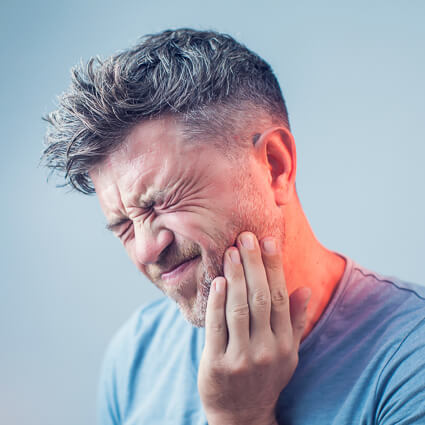
Looking for TMJ Care in Rochedale South?
Jaw pain, clicking, stiffness, or teeth grinding can make everyday activities like eating, talking, and even yawning uncomfortable. These symptoms may have several possible causes, which is why an accurate diagnosis is the first step.
Dental Health Plus provides thorough clinical examinations for people experiencing jaw pain or dysfunction, teeth grinding (bruxism), facial muscle discomfort and temporomandibular disorders (TMD). Every recommendation is based on your individual examination findings, oral health and personal circumstances.
What is a TMJ Disorder?
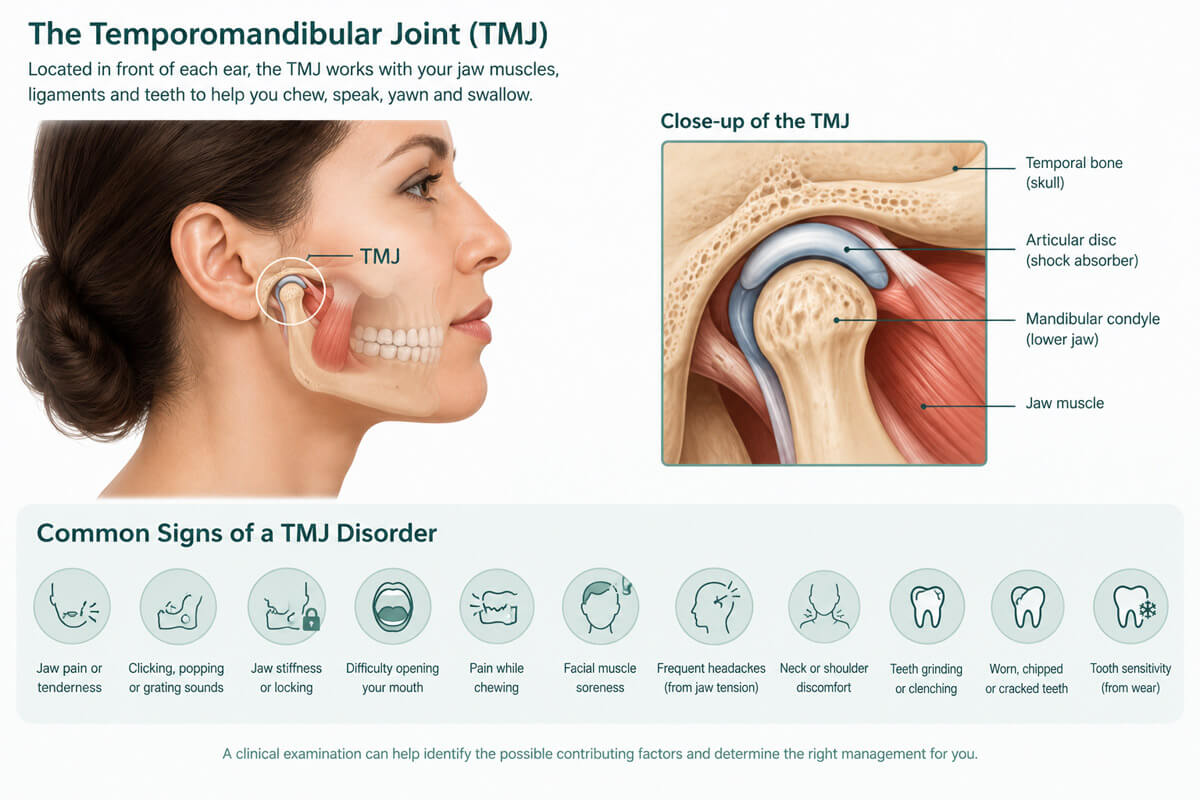
The temporomandibular joints (TMJs) sit on either side of your face, just in front of your ears. Working together with your jaw muscles, ligaments and teeth, they allow you to chew, speak, yawn and swallow comfortably.
A temporomandibular disorder, or TMD, is a group of conditions affecting the joints, surrounding muscles and nearby tissues. Some people notice occasional clicking without discomfort, while others experience ongoing pain, stiffness or difficulty moving the jaw. Because several conditions can produce similar symptoms, a clinical examination helps determine what may be contributing to your concerns.
Signs it May Be Time for a TMJ Examination
You may wish to arrange an examination if you experience:
- Jaw pain or tenderness
- Clicking, popping or grating sounds when opening or closing your mouth
- Jaw stiffness or locking
- Difficulty opening your mouth comfortably
- Pain while chewing
- Facial muscle soreness
- Frequent headaches associated with jaw muscle tension
- Neck or shoulder discomfort associated with jaw muscle tension
- Teeth grinding or daytime clenching
- Worn, chipped or cracked teeth from grinding
- Tooth sensitivity related to tooth wear
These symptoms are not always caused by a TMJ disorder, which is why a thorough assessment is needed before any recommendations are made.
What Can Contribute to Jaw Problems?
Jaw discomfort is often influenced by more than one factor. Teeth grinding, daytime clenching, muscle tension, previous injuries, arthritis affecting the jaw joint, bite changes, and sleep-related grinding can all play a role. In some cases, other medical conditions involving the muscles or joints may also contribute.
Rather than focusing on a single symptom, your dentist looks at the bigger picture to understand what may be contributing to your discomfort and whether dental care is appropriate.
What Happens During Your Consultation?
Your appointment begins with a discussion about your symptoms, medical and dental history, and any changes you’ve noticed in your jaw function. Your dentist will assess how your jaw moves, examine the joints and surrounding muscles, evaluate your bite and look for signs of grinding or tooth wear. Digital imaging may also be recommended where clinically appropriate.
Once your examination is complete, we’ll explain what we’ve found, answer your questions and discuss the options that may be suitable for your individual circumstances. There is no obligation to proceed with any care following your consultation.
Care Options That May Be Recommended
Many people begin with conservative care. Depending on your examination findings, this may include practical advice to reduce strain on the jaw, stretching or mobility exercises, recommendations for heat therapy, temporary dietary changes during symptom flare-ups and strategies to help reduce daytime clenching. If another registered health practitioner is better placed to assist with part of your care, a referral may also be recommended.
For some patients, a custom-made occlusal splint, sometimes called a night guard, may form part of their care plan. These appliances are individually made to fit your teeth and may help reduce the forces created by grinding or clenching, as well as further tooth wear. Whether a splint is appropriate depends entirely on your examination findings and diagnosis.
If symptoms continue despite initial care, your dentist will discuss any additional options that may be appropriate for your circumstances, along with the potential benefits, considerations and alternatives.
Follow-up appointments allow us to review your symptoms, monitor jaw function and make changes to your care plan if needed. The timing of review appointments varies depending on your individual needs.
Why Early Assessment Matters
Jaw pain is not always caused by the joint itself. Muscle tension, teeth grinding, bite changes, and other conditions may produce similar symptoms. Identifying the underlying cause early can also help detect tooth wear from grinding before more extensive dental work becomes necessary.
Patients visit Dental Health Plus from across Rochedale South and surrounding areas for personalised TMJ examinations and ongoing care. Every recommendation is based on a careful clinical assessment and your individual circumstances.
Frequently Asked Questions
Does jaw clicking always need care?
Let’s Find Out What’s Causing Your Pain
Jaw pain, clicking, clenching and restricted movement can all have different underlying causes. A thorough examination can help identify what may be contributing to your symptoms and whether dental care is appropriate for you. Contact us today to arrange your consultation.
