
Dental Bridges in Rochedale South
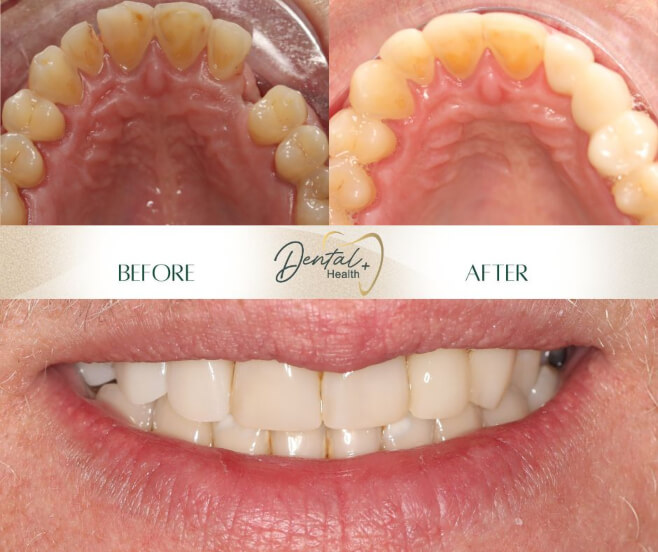
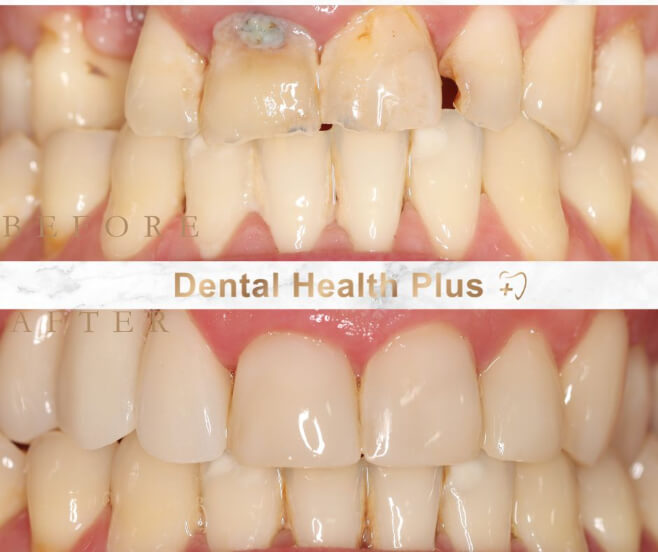
A missing tooth can affect more than the appearance of your smile. It may make some foods harder to chew, affect the way you speak or allow nearby teeth to gradually shift into the space.
Dental Health Plus offers dental bridges in Rochedale South as one option for replacing missing teeth. Our dentist can assess your teeth, gums and bite, talk through your tooth replacement options and explain what may be appropriate for your circumstances.
What Is a Dental Bridge?
A dental bridge is designed to “bridge” the gap left by a missing tooth. Unlike a removable denture, a conventional bridge stays fixed in place. With a traditional bridge, the teeth beside the gap are usually prepared for crowns. The replacement tooth sits between these crowns, creating one connected restoration.
Depending on your individual needs, a bridge may instead be supported by dental implants or designed to attach to neighbouring teeth in another way.
Types of Dental Bridges
There are several types of dental bridges. The location of the missing tooth, condition of neighbouring teeth, gum health and your bite can all influence which option may be considered.
Traditional Dental Bridge
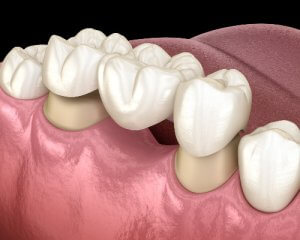
A traditional bridge uses crowns fitted over the natural teeth on either side of the gap. These teeth provide anchorage for the replacement tooth.
Implant-Supported Dental Bridge
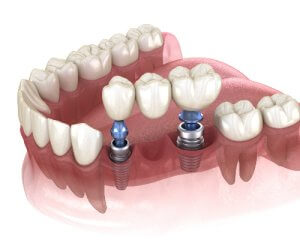
This type of bridge is attached to dental implants rather than natural teeth and may be considered when several neighbouring teeth are missing. Suitability for dental implants depends on your individual oral health and available bone.
Cantilever Dental Bridge
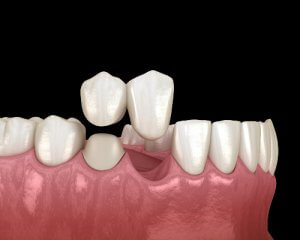
A cantilever bridge is anchored by a natural tooth on one side of the gap. Because this places additional biting forces on the supporting tooth, it is generally considered only in selected cases.
Maryland Dental Bridge
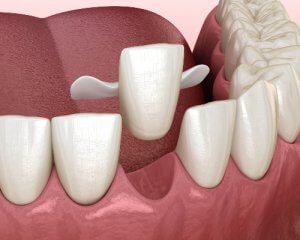
A Maryland bridge uses small wings bonded to the back of neighbouring teeth. It generally requires less preparation of those teeth and may be an option for certain missing front teeth. [source: 1]
if any, may be appropriate.
Why Consider a Dental Bridge?
Depending on your circumstances, a dental bridge may help to:
- Replace one or more missing teeth
- Improve chewing function
- Restore the appearance of your smile
- Assist with speech affected by missing teeth
- Help maintain the position of neighbouring teeth
- Provide a fixed alternative to a removable denture
These potential benefits vary between patients. Your dentist will explain what you can reasonably expect based on your oral health and proposed dental care.
Dental Bridge or Dental Implant?
Dental bridges and dental implants can both replace missing teeth, but they work differently.
A traditional bridge relies on neighbouring natural teeth for anchorage, while an implant-supported restoration uses dental implants placed in the jaw. In some circumstances, a removable denture or another restorative option may also be considered.
The choice depends on factors such as your oral health, available bone, neighbouring teeth, the location and number of missing teeth, and your personal preferences.
At Dental Health Plus, we’ll explain the advantages, limitations and process involved with the options that may be suitable for you, helping you make an informed decision.
What Happens When You Get a Dental Bridge?
Your care begins with a dental examination. Your dentist may also take X-rays, photographs or digital scans to assess the area and plan your bridge.
For a traditional bridge, the neighbouring teeth are usually prepared so crowns can be fitted over them. Impressions or digital scans are then taken to create the restoration. You may receive a temporary restoration while your bridge is being made.
At a later appointment, your dentist will check the completed bridge for fit, appearance and bite before fitting it in place. The number of appointments and overall timeframe will depend on the type of bridge and your individual needs.
Caring for Your Dental Bridge
There is no set lifespan for a dental bridge. How long it lasts can depend on factors including the type of bridge, the condition of the supporting teeth and gums, your bite and how well the area is cared for.
Daily cleaning is particularly important because plaque and food debris can collect underneath the bridge. Your dentist can show you how to clean these areas using suitable floss or interdental aids.
Brushing twice daily with fluoride toothpaste, cleaning around and underneath your bridge, and attending recommended dental examinations and professional cleans can all help maintain your restoration and surrounding teeth.
What If You Grind or
Clench Your Teeth?
Grinding and clenching can place additional forces on both natural teeth and dental restorations. If you have signs of grinding, clenching or tooth wear, your dentist will take this into account when assessing your bite and planning your care.
In some cases, a custom-made night splint may be recommended to reduce direct loading on the teeth and bridge while you sleep. Whether this is appropriate will depend on your individual bite, dental history and risk factors.
Considering a Dental Bridge in Rochedale South?
If you have a missing tooth, you don’t need to know which replacement option is right for you before making an appointment. Our dentist can assess the gap, surrounding teeth, gums and bite and discuss the options that may suit your circumstances.
We welcome patients from Dental Health Plus and nearby Brisbane suburbs, including Rochedale, Underwood, Springwood, Daisy Hill, Eight Mile Plains, Kuraby, Sunnybank and Mansfield.
Contact us today to arrange a consultation.
Any invasive or surgical procedure may carry risks. Before moving forward, it is recommended that you seek a second opinion from an appropriately licensed medical professional.
